
For years there has been a debate between Italy and France over many things. Who has the best food, who has the best coastline, and who has the best wine? None of these arguments, however, have escalated more than the idea of fashion. Italians will argue that Italy has the best fashion, fashion houses and best dressed people, while France will claim the same thing. Even the fashion capital of Europe is debated between Milan and Paris, however my time in Italy has led me to theorize this: even though they both have a strong lineage of fashion houses, the two countries have a very different sense of style. France is a haute couture capital, with big names like Christian Dior, Jean Paul Gaultier, Yves Saint Laurent. While these designers are popular around the world, their designs are for a certain type of woman, one who needs a special occasion to wear the outfit. This is where French and Italian fashion diverge, as the Italians have historically designed ready to wear, comfortable, practical clothing.
A view of the Versace Store in Capri
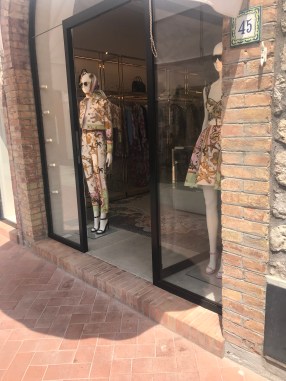
Why is fashion important to managing across cultures? Every where you go, people will have clothes on. We judge people based on these clothes, make assumptions of their lives and personality, and make connections with them based on the brands they wear. The art of clothing and what we wear conveys our cultural values, identities and heritage. The Italians have used fashion as an expression of their identities and culture. This is important to managing across cultures because it conveys messages indirectly and informally, while allowing the person to remain true to themselves without worrying what other people will think.
History and Names of Italian Fashion:
Fashion in Italy dates back to the Renaissance, but that goes a little too far for this class, so we will focus on the modern history. Prior to the 1950s, Italy only exported leather made goods, and was not known for fashion. While many famous fashion houses, such as Gucci and Prada were founded in the late 19thand early 20thcentury, it wasn’t until the 50s they progressed to mainstream success. When the French and Americans were making haute couture and very elegant and sophisticated designs, especially from Christian Dior, the Italians decided to introduce more ready to wear items. In addition to the newer ready to wear ideas, the Italians, especially Gucci began to export more handbags, many were made famous by the celebrities of the day including Audrey Hepburn, Grace Kelly and First Lady Jackie Kennedy. As the decades progressed so did Italian fashion, especially with the emergence of fashion houses Gucci, Prada, Versace, Armani and Dolce and Gabbana
Gucci:One of the most famous Italian fashion houses is Gucci, which was founded by Guccio Gucci in 1921. Originally known for its handbags and leather goods, the brand has transformed over the years to include other accessories and clothing items such as sunglasses, perfume, car interiors and ready to wear items. Their iconic double G has become a staple of red carpets and celebrity hand bags alike.
Creative Director: Alessandro Michele
CEO: Marco Bizzarri
Prada:Prada was started in 1913 by Mario Prada and his brother Martino in Milan as Fratelli Prada, specializing in leather goods. Fun fact, Mario Prada believed that no women should have a role in the company, but none of his sons were interested in the company, so his daughter Luisa took over, with the current head designer being Miuccia Prada, her daughter. Prada is most known for its luxury, leather handbags, as well as shoes, and ready to wear. In addition, Prada owns luxury brand Miu Miu, which specializes in shoes.
Creative Director: Miuccia Prada

Giorgio Amani: An interesting fashion house because this founder, Giorgio Armani did not create women’s wear, rather he catered mainly to men, specifically men’s suit. Today he is known for men’s and women’s clothing, but everyone knows that an Armani suit is one of the best in the world. In terms of Italian culture, Armani is one of the most prolific designers, and beloved by Italians, designing the national team costumes for the 2006 Winter Olympics in Turin and the 2012 Summer Olympics in London.
Dolce and Gabbana: The Italian duo of Domenico Dolce and Stefano Gabbana are relatively new to the fashion scene, in terms of when the company was founded, which was 1985. Their model varies by country, as they are known in America for their risqué ads, while the Italian market features strong family ads.

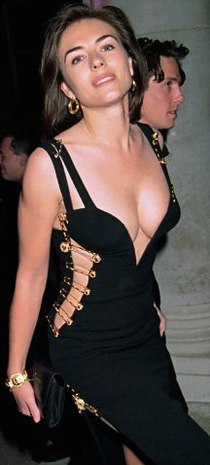
Versace:Without a doubt one of the most, if not the most, famous Italian fashion house. Founded in 1978 by Gianni Versace, the brand grew exponentially in the following decades, especially after big named models, such as Naomi Campbell, Linda Evangelista and Chrissy Turlington walked in his shows. Famous celebrities that wore Versace were Michael Jackson, Elton John, Diana, Princess of Wales and Princess Caroline of Monaco. Two of the most famous dresses were designed by Versace: “THAT dress” worn by Elizabeth Hurley to the premier of Four Weddings and a Funeral and the iconic green dress worn by Jennifer Lopez to the 2000 Grammy Awards.
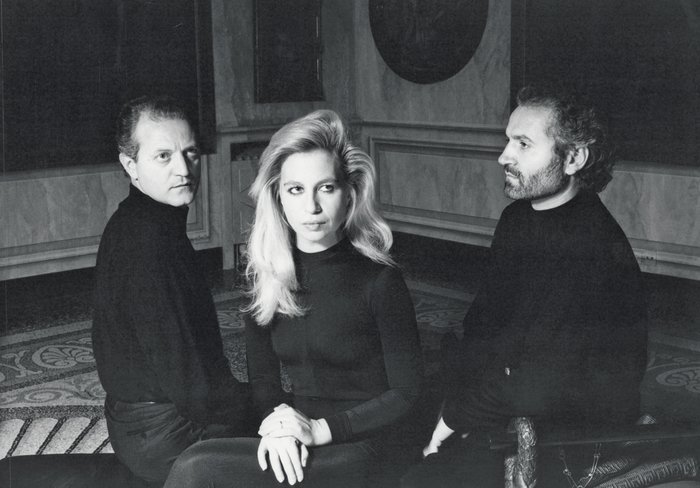
CEO: Santo Versace
Artistic Director: Donatella Versace

Role of Fashion in Italian Culture:
Fashion has played an important role in Italy for years. Since the time of Caesar, fashion has been a way of expressing social standings, flaunting of wealth, and signifying personal “achievements” such as getting married, being a widow, and being over a certain age. For the sake of simplicity, I will only be looking at modern fashion and how it translates into the culture. As stated before, Italian fashion did not become a global powerhouse until the 1950s, and expanded even more over the next few decades. What has made the Italian fashion houses so popular, and how does that translate to Italian culture? First let’s examine Italian versus French fashion. French fashion is very chic, formal, and what many people describe as uncomfortable and not useful. Italian fashion on the other hand is almost the exact opposite; it is comfortable, colorful, useful, and has patterns and intricate designs that is not commonly seen in French fashion. This translates perfectly into Italian culture. Italians take great pride in their work, family and country, and this shows in the fashion. Walking around Capri, the 5thAvenue of Italy, you could see that the best looking store, and the stores that really captured the Italian spirit were those of the Italian designers. In the Versace store in particular, the store felt like an Italian villa. I asked the women working about the store and they said that it was a concept store that was supposed to tie into their upcoming Versace resort that is set to open on the island. Looking closer at the store, there was detail that rivals the beautiful Italian villas we have walked in, especially the floor. The floor was mosaic tile that, according to one of the girls, came from Gianni’s villa. All of the fashion and clothing in the store reflected the Italian style. Again, the women in the store said that the fashion was very Italian and had a villa/summertime feel to the collection. Looking at the Versace website for both the U.S. and Italy, there is a change in how they market certain products, and what products are available to the citizens of those countries.
Men’s Italian Website versus Men’s U.S. Website
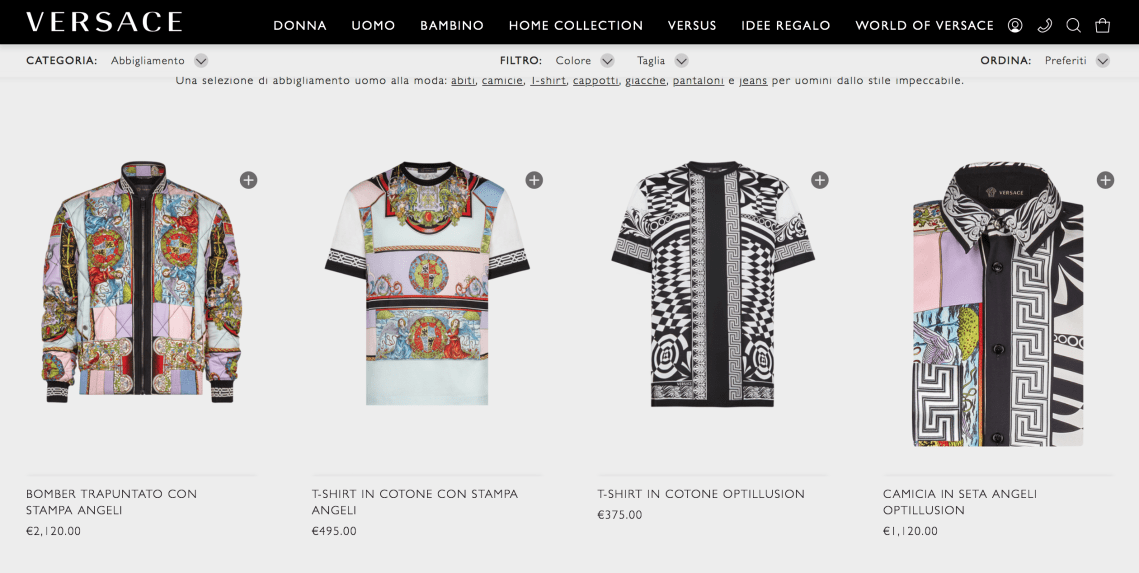

Women’s Italian Website versus Women’s U.S. Website


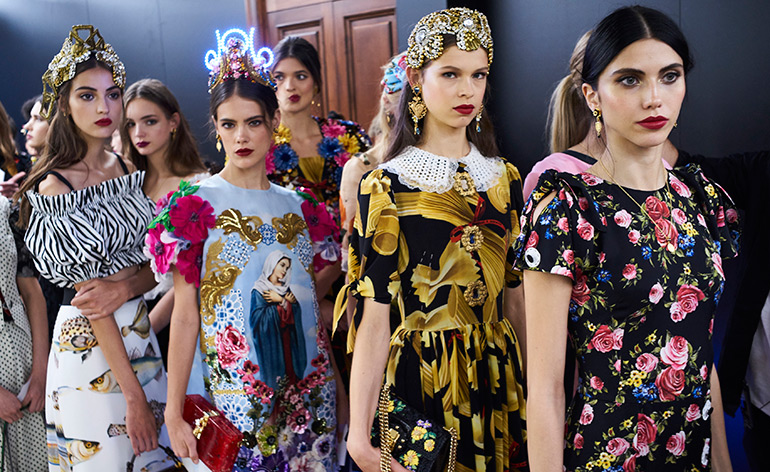
When people think of Italy, they picture women, especially mothers, in floral print dresses bringing fruit infused drinks to their family. All of the fashion designs made for Italian women as well as the women all over the world are made with this idea of an Italian housewife in mind. The floral and colorful prints have become a staple of Italian fashion and it gives off a motherly aspect to the people wearing them. Also, the men’s design gives off a sophisticated idea as to what people think Italian men dress, which includes leather and vibrant prints. How does this translate into Italian culture, and what people think is Italian culture?
During my time in Italy, I had the pleasure of interviewing a local Italian woman by the name of Serena Vacca. Serena is a Sorrento native who has worked at the Sant’Anna school for 6 years. Her job title at Sant’Anna, other than being a chief administrator, is a study abroad coordinator, which is the person who deals with most of the logistics, such as travel, excursions, and housing. In the interview with her, I wanted to find out what the most important aspect of Italian culture is, and she replied with family and religion. This family and religious aspect is shown in the designs of many Italian designers, as they incorporate the Madonna and Jesus into the designs, while incorporating traditional Italian designs and shapes. I know that I have been using Versace a lot, but their designs are the most interesting and they are one of the most well known. Their designs are throw backs of old Italian artwork, the simpler patterns are in darker colors, which signifies age, and those darker colors are made in such a way that doesn’t reveal much skin. Speaking of families, many of the Italian fashion houses are run by family. Miuccia Prada inherited the company from her mother, who in turn inherited it from her father, the founder. After Gianni’s murder in 1997, his sister, Donatella took over creative control of the brand, while their other brother remained as CEO. Even Dolce and Gabbana were run by a couple, although they have since split up, but still contribute to the house.
The final way Italians express themselves in fashion is by the patterns themselves. They often incorporate traditional Italian styles and artwork, that allows the designers to show pride in their heritage and culture. One of the most prominent examples of this is the Versace logo, which is modeled after Medusa, a villain of Greek Mythology, but the Greek and Roman mythology is intertwined with each other, so the fact that it is Greek can show a nod to the history of the Romans. Many of the designs incorporate Baroque style, which was prominent in Italy in the 17thand 18thcenturies. Some of the designs also have a stained glass style that can be attributed to the many churches in Italy, as well as Italian Renaissance style. Both of these styles were pushed by the Catholic Church in their respective time frames, and we all know how important the Catholic church is to the Italian people.
In conclusion, while the Italian fashion started slow, the industry has grown so much that Italy is a fashion capital of the world. While remaining different to other fashion styles, the Italian fashion houses have stayed true to themselves, and they continue to get inspiration from the pillars of their community. Family and religion are exceptionally important to their society, and through fashion, they show that no matter what they wear, it will always be with them.
About me:
Hello everyone, my name is Ryan. I currently live in Denver, Colorado, however, I was originally born in Lubbock, Texas. I will be a senior at the University of Colorado Denver in the fall of 2018, with a major in Communications and a minor in Business. I have enjoyed my time in Italy so much, and I cannot wait to come back to the country and explore more in the future. This experience has given me perspective into how other cultures function, as well as the idea the managing across cultures is not as easy as it seems. I hope you enjoyed my take on Italian fashion. Ciao!

References:
https://www.metmuseum.org/toah/hd/itfa/hd_itfa.htm
https://www.versace.com/it/it-it/home/

 Under the Sorrento Sun