“All the world’s a stage,
And all the men and women merely players;
They have their exits and their entrances,
And one man in his time plays many parts”
–As You Like It, William Shakespeare
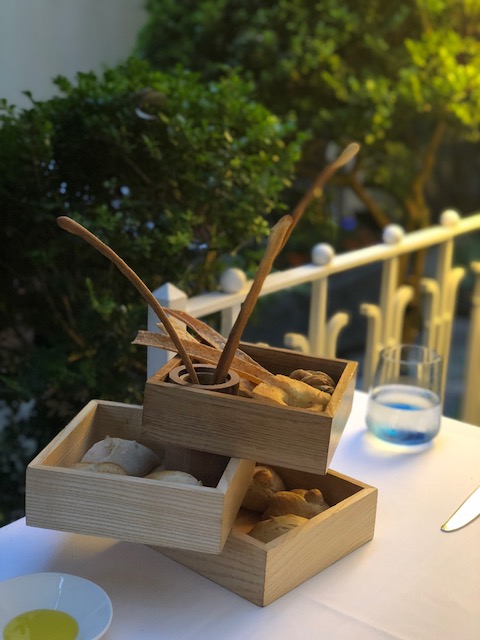
What’s the first thing you think of when Italy comes to mind? For me, it has always been romance. Not just in the sense of a relationship between people, like a love affair, though that is certainly part of it. But also just pure passion for conversation, food, coffee, wine, appearance, family, and work. A romance and love affair with all parts of life. I always had this mental scene of men dressed to the nines with dark slicked back hair, talking with boisterous hand gestures cradling a woman on one arm and holding a cigarette in his other hand. Probably sitting at a white table clothed table, with a basket of bread and glossy wine glasses in front of them. The waiter, an older gentleman, with a black suit and tie, carries the wine bottle to their table and presents it as if it is a golden crown for a king. Now, actually being in Italy, this picture of romance and elegance I just painted is very much true to the stereotype. Learning why has been my adventure.
Italy was not unified as a country until 1861. It is a relatively young nation, and each of the different regions brought very distinct cultural values and attitudes to the new whole. In a sense, to be Italian and what that means/looks like is a very important and conflicting question. How do they keep their regional roots but merge together as a unified country? In other words, how do they claim an Italian identity? What does being Italian look like?


In part, I think they are able to affirm that national identity through gender roles. There is a concept called “La Bella Figura” which has a literal translation to “the beautiful figure.” This is applicable to not only woman and how they dress, but also everyday interactions among all people. Think of this concept as a very conscious effort to keep up appearances and take pride in doing so. For instance, all the restaurants we dined at would not dare to serve us a house wine that was not exquisite. To serve us bad wine, even if it is just table wine, would be an insult to their restaurant and therefor an insult to themselves. That being said, La Bella Figura is deeply woven into their work practices and concept of self but it seemed especially prominent among the women. We were in Positano where this lady walked past me wearing tall heels, long black skirt, a white turtle neck styled blouse with Dolce and Gabbana sunglasses, and her hair nicely wound into a ballerina type bun. And she was carrying bags full of groceries. Even for a trip to the grocery store, women maintain this perfect figure, this refined and elegant image. I imagine she spent the rest of her day using those groceries to make her family an excellent dinner. The act of her putting on this display of femininity, even just to take care of basic human needs like food, is her fulfilling her role in Italian culture, maintaining the image of pride, and ultimately answering the question of what does an Italian woman look like. She is poised and polished, she is taking care of her family, she is proud of doing so. That Italian love affair between appearances, food, and work came to life in that woman who briefly passed me by.


Four of us – two girls in our early twenties, a young man in his twenties, and a older man in his fifties – went to dinner several times over the course of the trip where we experienced a bit of these distinct social gender roles. At one dinner, the young lady of our group asked for the check and our waiter barely acknowledged that she made that request. It was only when our older male student made the request that the waiter responded. This is where Italian Machismo comes into play with La Bella Figura. Machismo is defined as “strong or aggressive masculine pride” which can play out in differently depending on the culture. In Italy that machismo is centered around the male being this dominant and almost protective figure in social settings. So, when we were at that dinner, the young lady asking for the check was on the verge of insulting. The male should take pride in providing the experience of dinner for the lady, no matter the relationship between the two. He should assume the role of overseeing and directing. To not do so, presents an unappealing image which does not align with who Italian men are. The machismo is so prevalent in this culture because it is correlated with pride. A male Italian is not only a dominant male, but he is prideful in his male role. If he is not proud and committed in asserting that, he is not keeping up his Italian identity. Again, this love affair between who they are and what they are doing – be it work or leisure – is important to the sense of self as part of the Italian community. The machismo is an effective socialization strategy to withhold the cultural practices and values.
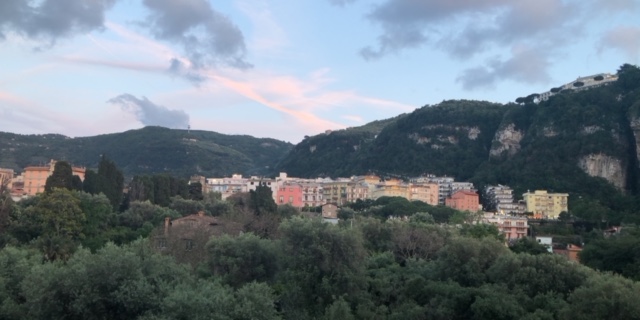
If the Italians value keeping up appearances, if the norm is to live like La Bella Figura, it would make sense that they are very sensitive in social settings. “Saving face” is a social strategy used to avoid embarrassment and allow a space to maintain the dignity and pride of an individual. In Sorrento our hosts of the Sant’Anna Institute, waiters in restaurants, venders on the street, and bus drivers were very warm and reassuring when we needed them to be. In part, this act of saving face for us was probably good tourist business. However, since it occurred in the same manners across different social settings and functions the behavior is a product of cultural context. Saving face communicates deep cultural values of good public appearances. This is because the public is where the National Italian Identity is performed. So if one does not save face, if one does not live La Bella Figura or exemplify Machismo, one is not upholding the Italian pride and therefor not showcasing who an Italian is.
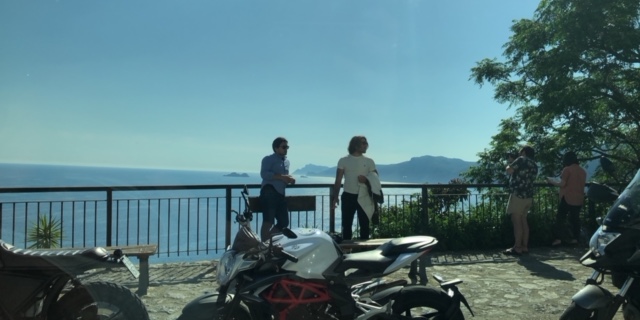
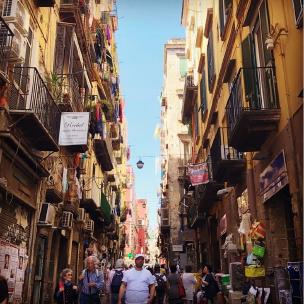
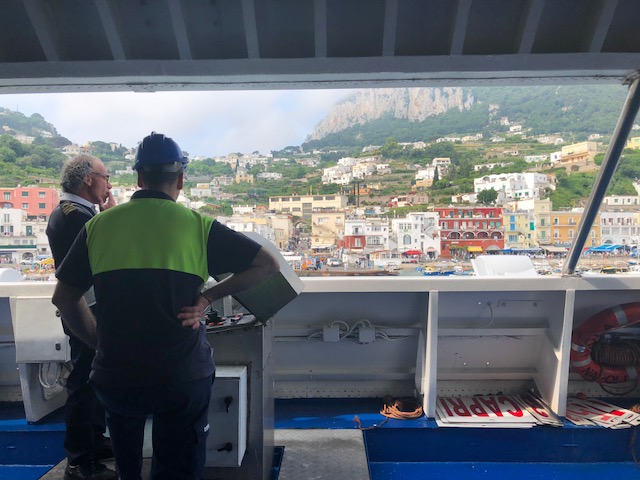
In Sorrento and Capri, I very much felt as if this was a stage for Italian culture. A place where people from all over the world could come to experience the best parts of what it means to be an Italian. Whereas in Naples and Rome it felt a bit more raw and unapologetic for not maintaining their perfect image of La Bella Figura. The streets of Naples were littered with graffiti, the restaurants and venders didn’t speak a lot of English (an indicator that they are not catering to tourists), and there were protests and military police present. The story of Rome is very similar. If Sorrento and Capri were the stages for the performance of Italian Identity, Naples and Rome were the backstages where the actors take off their costumes and walk home in the grimy streets. To me, it felt more human there and less like a movie. In a way it was very comforting to find some sameness amongst different cultures, that the streets I walk home from work in Denver could very easily be a street in Naples. The interactions with people felt familiar – their casual nods as we passed by, the people tending to their laundry on the balconies, the fast food like street food, even getting a glimpse of the homeless population was refreshing. Those un-embellished interactions with people in Naples and Rome provided an authentic, trustworthy, and perhaps more well rounded picture of the culture of Italy.
For example, our guide for our day in Rome was named Teo, I conducted a very unstructured interview with him throughout the day. He broke every Italian stereotype we had been studying. From family being a core value, having strong ties to their birthplace, structuring their life to maintain close ties to the family and birthplace, and finding a sense of self within their community. He said that he thought of himself like a cat with nine different lives. Each life, he planned to live a different way. Right now he lives as a tour guide, but he hasn’t always been and soon he will play a new part on this stage of life. That he values his personal freedom over everything else. He was born in Naples but did not feel a deep connection to that city, and defined himself as a “adapted Roman” since Rome is his current home. Whoever his family is, they were not a significant enough element of his life to dictate his direction. Instead, he was very driven by a desire to learn as much as he can about as much as he can. He was a friendly reminder that cultures produce norms and values and belief systems, and people learn to socialize though those. But cultures are still made of individuals, each of who play their part either on stage or backstage, but choose to play it with their own unique sense of self.
About the Author:
My name is Caroline, I am a sociology major at the University of Colorado Denver. I have a deep love for good food and wine, reading, writing, and interesting people. Experiencing the Italian stage of life has stirred these passions in me more than ever, and I am sure that will move in me and with me for the rest of my life.


 Under the Sorrento Sun